CBAM is live, now what?
Jan 14, 2026
Two weeks into CBAM, and carbon costs do not stop at EU importers
CBAM has now been live for two weeks, and consumers are already feeling it:
Carbon costs are no longer theoretical, they are reflected in procurement prices.
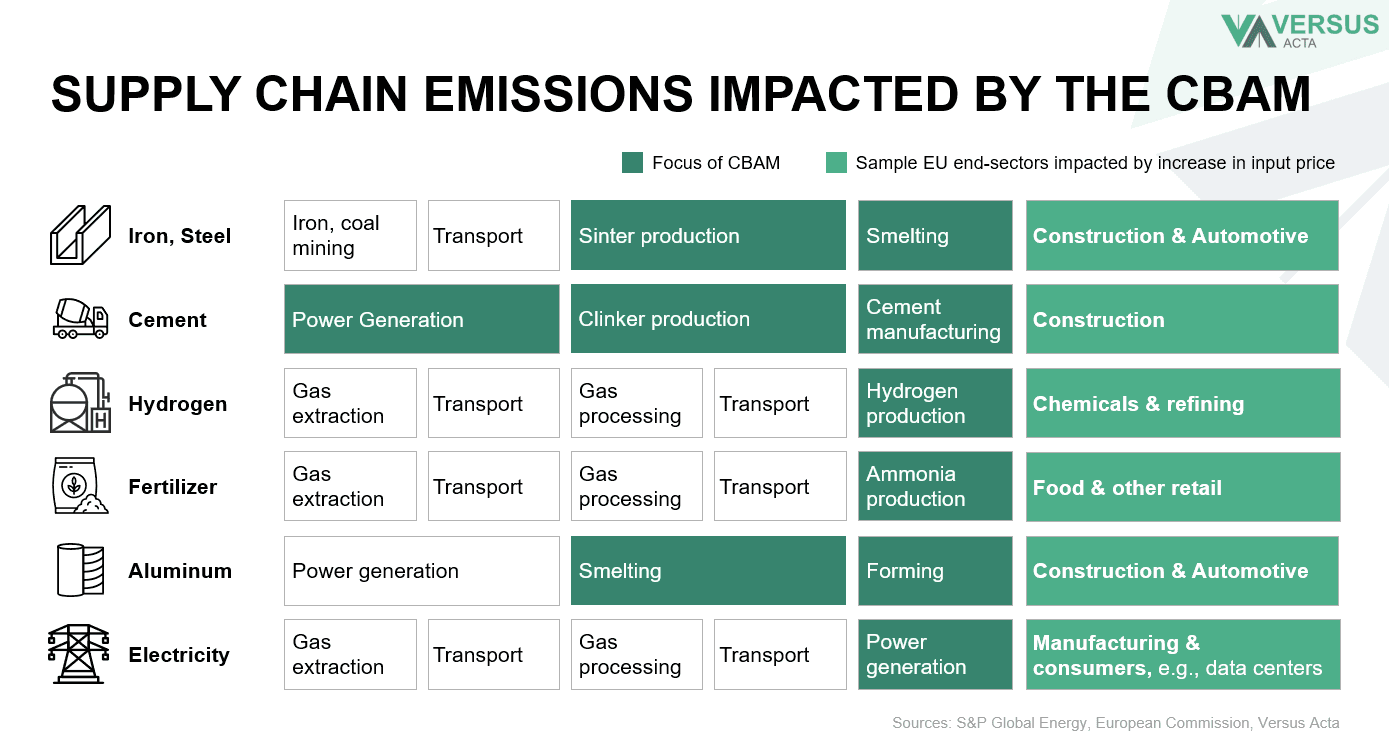
Importers of steel, cement, fertilisers and chemicals are now pricing embedded CO₂ directly into contracts.
Early signals suggest these costs are moving downstream, as price impacts will reach end markets, such as food, automotive or construction.
Supply chain emissions have shifted from reporting (voluntary or mandatory), to a commercial risk:
Carbon exposure is now a cost line, set to rise further as EU ETS free allowances are phased out over the coming decade.
Supplier choice directly affects price, margin, and resilience in a carbon-priced world.
Not all “green” suppliers reduce emissions, or costs, in the same way.
The companies best positioned right now are not the ones with the best narratives.
They are the ones that understand their green supplier options and can optimise across emissions, cost, and regulation to choose the lowest-cost path to decarbonisation before costs are fully passed through to customers.
This matters whether you are directly exposed to CBAM, or further downstream in the supply chain, and exposed to the input price increases.
At Versus Acta, we help companies to reduce supply chain risk and improve unit economics by identifying and matching them with the most cost-effective low-carbon producers. We give companies agency over their supply chain, and reduce risk exposure, whether with direct suppliers, or with parts further removed in the value chain.
Get in touch for more on supply chain resilience and decarbonization opportunities